
Tooth Fairy Traditions Around the World: A Bear-y Magical Journey
At Molar Bears Dental Care, we know that losing a tooth is more than just a wobbly milestone - it’s a rite of passage, a sparkling moment of childhood magic. But did you know that the Tooth Fairy isn’t the only character collecting little pearly whites?
From flying fairies to sneaky mice to teeth tossed toward the sun, children around the world celebrate this milestone in wonderfully different ways.
So grab your honey pot and let’s take a global tour of tooth traditions that will make your child’s next gap-toothed grin feel even more magical.

Molar Bears Tooth Fairy
Australia, New Zealand, the UK & USA – The Classic Tooth Fairy
Here in Australia, the Tooth Fairy is a much-loved house guest. When a cub loses a tooth, it’s placed carefully under the pillow, and overnight, the fairy swaps it for a coin, note, or small gift.
Some Aussie families now leave “tooth certificates” or tiny handwritten letters alongside the treasure. Others bear down on inflation and slip in a gold coin or five dollar notes. Whatever the exchange, the Tooth Fairy’s role is to keep the milestone fun, light, and paw-sitive.
The New Zealand Ministry of Health notes that cultural traditions like these help children engage positively with oral health (Ministry of Health NZ, 2020). That means the Tooth Fairy isn’t just sprinkling magic - she’s setting the stage for lifelong dental care.
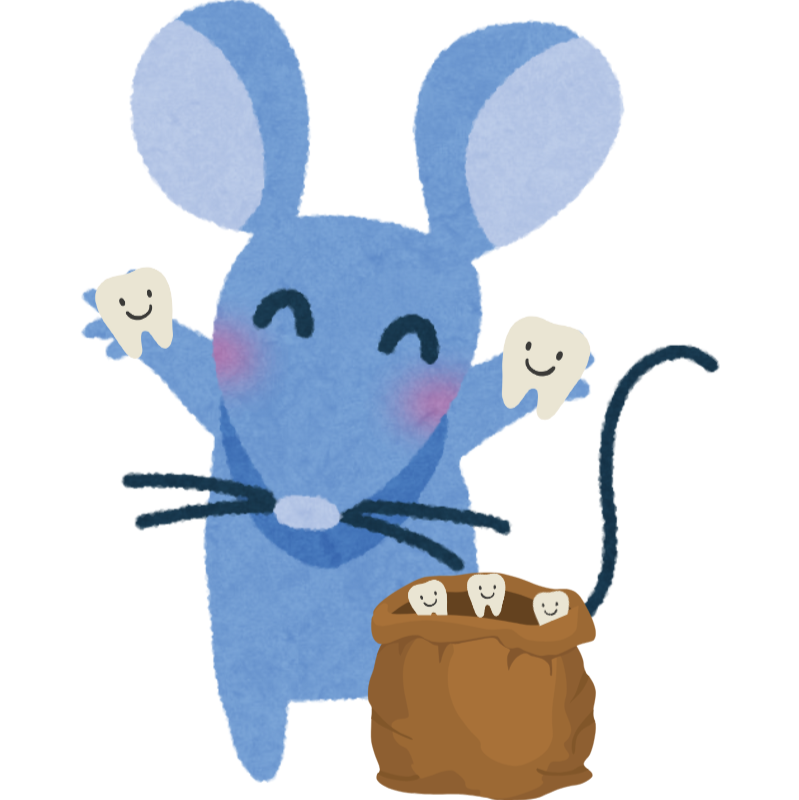
Little Tooth Mouse
Spain, Mexico & Latin America – El Ratón Pérez
Instead of a fairy, children across Spain and Latin America await a little mouse called El Ratón Pérez. The story began in 1894, when author Luis Coloma wrote about a brave mouse who collected teeth from under children’s pillows.
In Spain, the tooth is left under the pillow, and by morning, a coin or small gift has appeared. In Mexico and much of Latin America, Pérez is just as busy, scurrying through the night with the same mission.
Fun fact: In Madrid, there’s even a museum dedicated to El Ratón Pérez, where children can learn about dental care while honouring their favourite rodent tooth collector.
France – La Petite Souris (The Little Mouse)
Across France and Belgium, children know that it’s not a fairy but La Petite Souris - the little mouse - who sneaks under the pillow. She collects the tooth and leaves behind a coin.
This tradition shows up in French-language children’s books and films, making the little mouse a cultural icon in the same way the Tooth Fairy is for English-speaking kids.

Throwing Teeth
Japan – Tossing Teeth for Luck
In Japan, children throw lost teeth with purpose:
Upper teeth are thrown down to the ground.
Lower teeth are tossed up onto the roof.
The idea? Encouraging the new teeth to grow straight, strong, and in the right direction - like a perfectly aligned bamboo shoot. This tradition is all about guiding growth, which resonates with what dental professionals stress: baby teeth matter for the path that adult teeth will follow (ADA, 2019).
India – Roofs and Rituals
In India, tooth traditions vary across regions. Some children throw their teeth onto the roof while chanting wishes for strong replacements. In other areas, teeth are offered to animals such as mice or birds - a nod to the belief that animals can help children grow brave, clever, or strong.
Like everywhere else, the underlying wish is the same: healthy growth and a future full of smiles.
Middle East – Tossing Toward the Sun
In countries such as Egypt and Saudi Arabia, children throw their teeth skyward, often toward the sun, while reciting rhymes. The belief is that the sun, in return, will bless the child with stronger teeth.
It’s a sunny reminder that cultures everywhere link oral health with blessings, growth, and well-being - a concept echoed by Australian research showing oral health strongly influences overall child health and school readiness (Jamieson et al., 2016).
South Korea – Bird Food for Strong Teeth
Korean children toss their teeth onto the roof, hoping that magpies will swoop down to take them. In return, the magpies are believed to bring good luck and ensure the child’s new teeth grow healthy and straight.
It’s a chirpy reminder that even birds can play their part in oral health traditions.

Teeth Planting
Turkey – Planting for the Future
In Turkey, teeth aren’t just discarded; they’re planted. Families may bury the tooth in a special place tied to future hopes for their child - near a school for academic success, a sports field for strength, or even a mosque for wisdom.
This symbolic act shows how deeply oral health is linked with aspirations for a child’s future. After all, as the Australian Dental Association reminds us, healthy baby teeth pave the way for healthy adult smiles (ADA, 2019).
Philippines – Teeth in Special Boxes
In the Philippines, children often place their teeth in small decorative boxes or containers instead of under a pillow. In rural areas, the tooth might even be buried near the home for protection and to encourage strong regrowth.
Teeth as Talismans
In some Indigenous cultures, children’s teeth were sometimes kept as keepsakes or worn as jewellery. These little treasures were thought to protect the child and keep them strong.
Though practices differ, one thing is universal: teeth aren’t just bones, they’re milestones.
Celebrating healthy teeth
What All These Traditions Have in Common
Whether it’s a fairy fluttering under the pillow, a mouse scurrying with a coin, or a tooth flying toward the sun, the common thread is clear:
Childhood milestones are worth celebrating.
Oral health matters across cultures.
Losing a tooth is both magical and meaningful.
Research in Australia shows that positive early experiences with teeth and dental care build lifelong habits (AIHW, 2020). These cultural traditions, though playful, also support an important truth: healthy teeth mean healthy kids.
A Bear-y Special Takeaway
At Molar Bears Dental Care, we love seeing the joy in every child’s smile - whether it’s gap-toothed or fairy-approved. While the traditions may differ around the world, the message is the same: every tooth tells a story, and every smile deserves care.
So next time your cub loses a tooth, remember - you’re not just slipping a coin under the pillow. You’re connecting to a global tradition of celebrating growth, resilience, and sparkling futures.
Sources
Australian Dental Association (2019). Children and Oral Health – First Dental Visit.
Ministry of Health NZ (2020). Enrolling Children in Oral Health Services.
Australian Institute of Health and Welfare (2020). Australia’s Children: Oral Health.
Jamieson, L. et al. (2016). Oral health inequalities and the impact on children. Australian and New Zealand Journal of Public Health.
Warmest regards,
Milly Griffin - Founder & Director
